
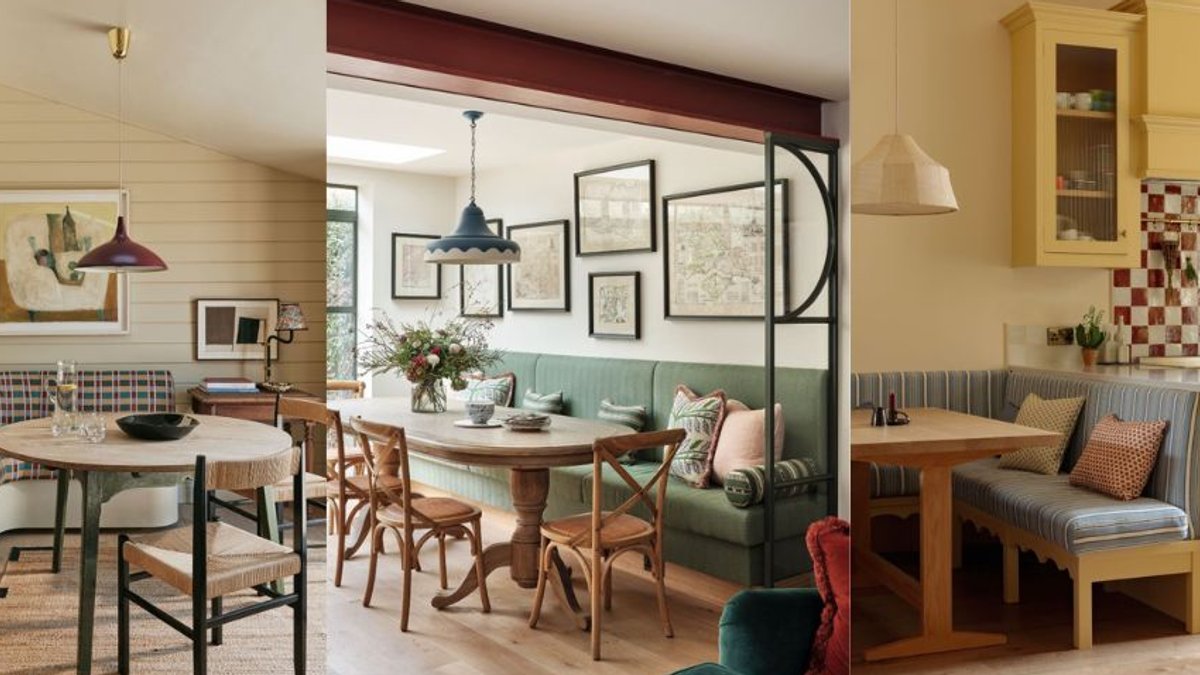
Banquette seating is gaining attention as a practical way to enhance kitchens that also serve as dining areas, offering both style and function in a single built‑in solution.
Design flexibility and space efficiency
Because banquettes are fitted, they can be planned alongside the rest of the kitchen layout, allowing designers to tailor dimensions to the room’s exact needs. A typical seat depth of about 50 cm provides comfort for most users, though deeper cushions can create a lounge‑like atmosphere. The built‑in nature also frees up floor space that would otherwise be occupied by separate chairs.
Adding storage under the seat is a common advantage. Pull‑out drawers or lift‑up lids can hold anything from table linens to children’s toys, turning the seating area into a hidden utility space. Prices vary widely; a simple DIY project may cost a few hundred pounds, while a fully custom joinery job can run into the thousands. Homeowners should therefore consider these costs early in the budgeting process.
Material choices and aesthetic options
Upholstery selections range from bright fabrics to smooth leather. In one recent project, interior designer Brooke Copp‑Barton used pink leather to solve an awkward window‑frame layout, allowing the seat backs to lower neatly around the pane. Another example features a rust‑and‑lilac fabric from Studio Cathy Nordström, priced at £150 per metre, which brightens a compact nook.
Stain‑resistant, wipeable fabrics are especially useful in busy kitchens. A bespoke banquette by Alice Grace Design employs a blue‑piped stripe pattern that combines durability with visual interest. For a more formal look, a beige upholstery from Bennison Fabrics was paired with a high‑end chair to create a polished breakfast nook.
Leather options also appear in contemporary projects, such as a water‑view kitchen where a leather‑upholstered banquette frames the dining area. These choices can either blend with surrounding cabinetry or stand out as a focal point, depending on the intended mood.
Beyond material, the shape of the banquette can follow the room’s geometry. A curved corner extension in a London apartment makes use of every inch, while a long run of green‑upholstered seating softens an open‑plan layout, adding warmth without sacrificing openness.
Related: Nature Inspired Home Features Green Kitchen
In many cases, banquettes provide more seating than individual chairs, particularly in corners where standard furniture would be awkward. Projects from firms like Herringbone House illustrate how a custom corner seat can accommodate several people while maintaining a clean aesthetic.
While the trend is largely about maximizing space, it also encourages a shift toward more communal dining experiences. The built‑in nature creates a sense of unity, inviting family members to gather without the visual clutter of separate chairs.
Practical considerations for homeowners
When planning a banquette, consultation with a designer or architect is advisable to ensure the seating aligns with cabinets, appliances, and traffic flow. The installation timeline may coincide with other kitchen renovations, so coordination is key to avoid delays.
Budgeting should account for both the base structure and the upholstery. Custom fabrics can add a premium, but they also offer durability and the chance to reflect personal style. Homeowners should weigh the long‑term benefits of higher‑quality materials against initial costs.
Maintenance is another factor; stain‑resistant fabrics simplify cleaning, while leather may require periodic conditioning. Selecting a finish that matches the kitchen’s overall usage patterns helps prolong the seating’s lifespan.
Overall, banquette seating presents a versatile option for those looking to blend dining and kitchen functions while preserving a cohesive design language.
Banquettes change kitchen life.


