
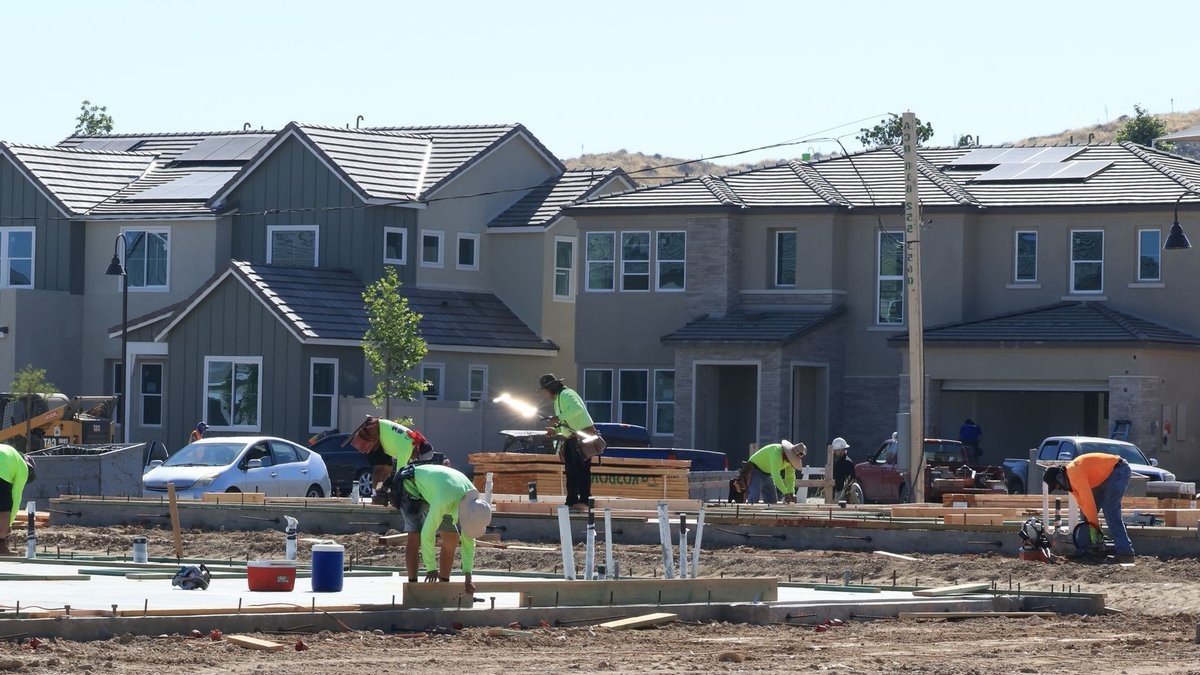
Dallas-Fort Worth remains a key player in the national new-home market, despite builders grappling with affordability issues, rising mortgage rates, and hesitant buyers. Amid these challenges, the region’s robust economic foundation continues to fuel long-term housing demand.
Economic Strengths Bolster Housing Market
Dallas stands out in Zonda’s housing fundamentals analysis, driven by positive demographics, job growth, and household formation. As of August, the Dallas-Fort Worth metro added 43,100 jobs year over year, maintaining a steady 4.4% unemployment rate.
While job growth has slowed compared to previous years, employment increases remain consistent, underpinning housing demand. Higher-income sectors, particularly professional and business services, construction, health services, and transportation, have seen notable expansion.
This economic resilience helps maintain buyer interest, with Dallas averaging about two sales per community monthly. Though demand is stable, it falls short of being robust. Builders note that buyers remain active but are taking more time to decide and are more sensitive to monthly costs.
Shifting Demand and Market forces
Incentives play a key role in keeping sales moving, though they squeeze profit margins. The demand profile has changed significantly. In early 2018, homes priced under $400,000 made up 61% of new-home sales in Dallas. Today, that share has dropped to 48%.
Meanwhile, homes priced between $400,000 and $500,000 have gained traction, and those above $500,000 now represent a larger portion of total sales than in previous years. This shift shows how affordability concerns have pushed buyers toward higher-priced homes, even as entry-level demand persists.
On the supply side, builders are more cautious. Annual new-home starts reached 38,833, a 13% year-over-year decline, while closings fell by 15%. This slowdown reflects the market’s adjustment to slower sales rates.
Interestingly, Dallas continues to see more closings than starts, indicating builders are prioritizing existing projects over new production. Activity is concentrated in growth areas, with Collin County leading in starts at nearly 30%, followed by Denton County at just over 20%.
Solid economic fundamentals sustain housing demand, but affordability issues and changing buyer preferences demand a more strategic approach to pricing, product placement, and land development. These insights come from Zonda’s Dallas Dealmakers event.


