
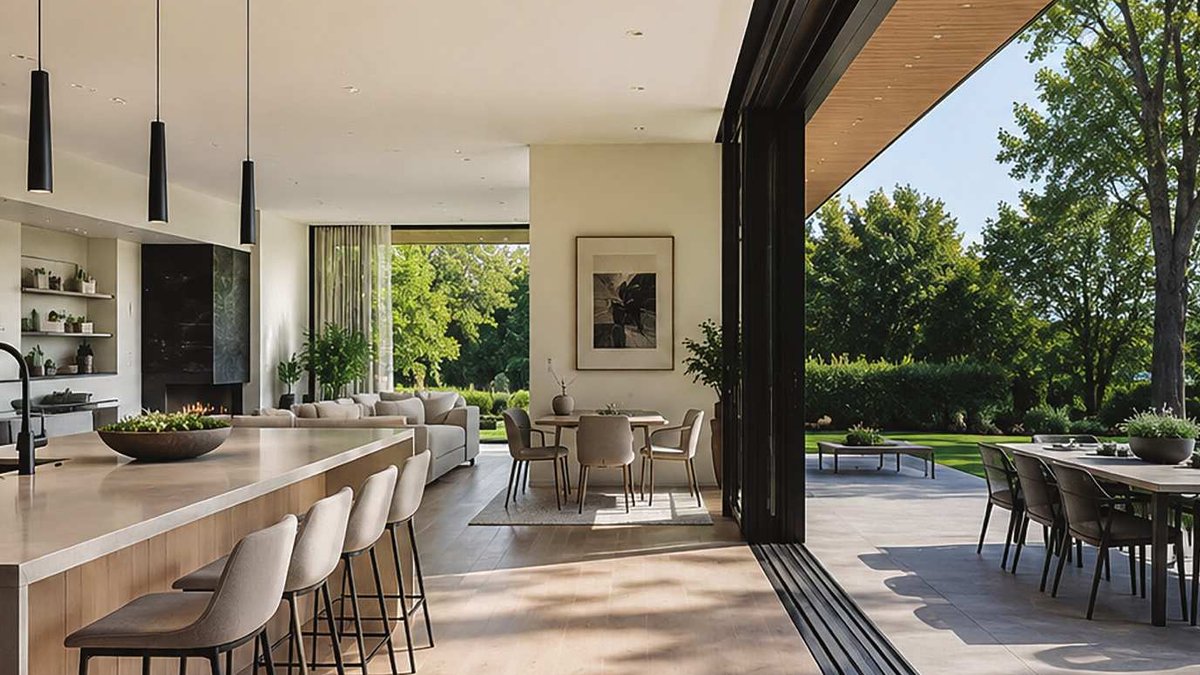
Luxury residences across Ontario are increasingly built around the concept of outdoor living, a design philosophy that blurs the line between interior rooms and the outside area.
Glass walls reshape everyday spaces
Floor‑to‑ceiling glazing now dominates kitchens, living rooms and dining areas, allowing occupants to step directly onto terraces, pools or garden yards. The expansive panes can be fully opened in warm months, while still offering a visual link to the outdoors when sealed against cold.
Manufacturers report that these systems are no longer an afterthought; they are central to the architectural plan. Minimal sightlines and oversized sliding mechanisms create a sense of openness that many buyers describe as “immersive.”
Because the glass is engineered for thermal efficiency, homeowners can keep the view without a significant energy penalty. The technology also supports cleaner lines, which aligns with current preferences for uncluttered aesthetics.
Industry response and product focus
One firm that has positioned itself around this trend is Trimark Windows. The company, a certified fabricator, produces European‑style aluminum frames that combine a sleek look with strong performance metrics.
Its literature says its products undergo annual training to maintain certification, ensuring that each installation meets high standards for durability and insulation. The emphasis on engineering is meant to complement the visual impact of the glass.
Critics note that while the look is appealing, the cost can be higher than conventional windows. Yet many developers argue that the added value in marketability offsets the expense.
In a recent market snapshot, homes featuring large glass openings commanded price premiums of roughly 5 % to 8 % over comparable properties without such features. The data suggests a buyer willingness to pay for the enhanced experience.
Related: How to Choose the Perfect Bed
These figures line up with broader shifts toward open‑plan layouts that prioritize natural light. The trend is not limited to new builds; renovations are also incorporating sliding panels to retrofit older homes.
Some neighborhoods are seeing entire streets where the façades share a common glass language, creating a cohesive visual corridor. This uniformity can boost the overall appeal of a development.
Nevertheless, the reliance on glass raises questions about privacy. Homeowners often mitigate this by using strategic plantings or frosted sections that preserve the view while limiting sightlines.
Experts caution that climate considerations remain important. In regions with harsh winters, the performance of glazing must be matched with proper sealing and insulation to avoid heat loss.
Still, the desire for a fluid transition between indoor and outdoor spaces appears to be a lasting shift rather than a passing fad.
Smart glass adapts to sunlight.
Builders will keep refining these systems, perhaps integrating smart glass that adjusts tint automatically. If the market continues to reward homes that feel connected to nature, the technology will likely become more affordable and widespread.


