
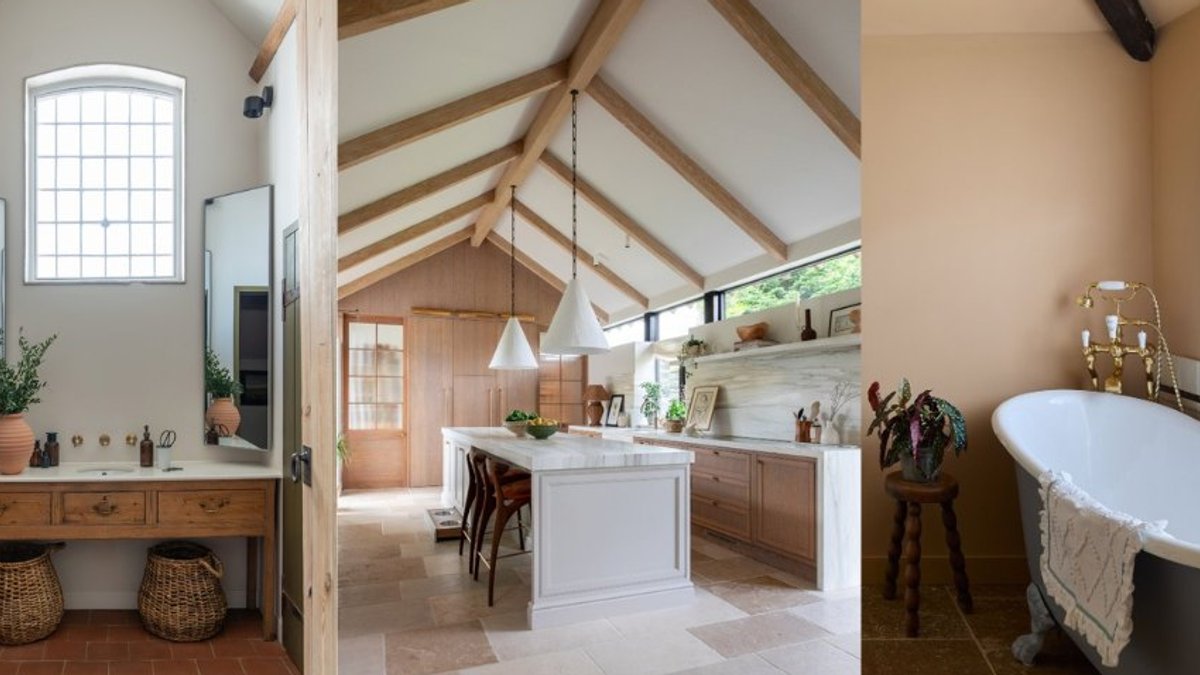
The modern rustic interior blends raw materials, earthy tones, and lived-in charm, remaining popular in both countryside retreats and urban apartments. Celebrities like David and Victoria Beckham, Jennifer Garner, and Mila Kunis and Ashton Kutcher adopted the look, yet its appeal reaches well beyond celebrity homes.
Emma Deterding, founder and creative director of Kelling Designs, explained that the style endures because it delivers what homeowners want: warmth, authenticity, and comfort. It relies on natural materials, timeless craftsmanship, and pieces that add character, creating spaces that feel welcoming.
The look has evolved into something more refined, though its versatility keeps it relevant. “It balances practicality with charm, making it adaptable for everything from traditional country homes to modern builds,” Deterding said.
Marcus Pearson, head of design at Old London, noted that rustic interiors don’t follow a single formula. The Beckhams’ Cotswolds farmhouse highlights heritage details, while Kunis and Kutcher’s barn incorporates reclaimed materials with clean lines. What ties these spaces together is the use of tactile materials and thoughtful craftsmanship.
Wood serves as a foundation for the style, whether in exposed beams, reclaimed flooring, or furniture. Pairing it with brick, stone, and a neutral palette strengthens the effect. Deterding recommended starting with warm neutrals and nature-inspired tones like greens, terracottas, and ochre. Layering textures such as linen and woven fabrics adds depth and a sense of history.
Related: Waterfall Islands Enhance Modern Kitchens
Antiques and vintage pieces contribute to authenticity, making a space feel curated over time. Pearson described the best rustic interiors as those that draw from rural living without becoming overly nostalgic. They feel grounded and lived-in.
Even small changes can introduce the style. A reclaimed brick accent wall, limestone tiles, or linen curtains soften modern spaces while preserving rustic warmth. Some use wood drenching—applying the same wood across floors, walls, and furniture—to create a cohesive, enveloping effect.
The style’s lasting appeal lies in its contrast to sleek, impersonal contemporary design. It offers comfort in imperfection and history. The best examples appear effortless, as if the space developed naturally over time.
The key lies in balance. Too much distressed wood can feel heavy, while too little risks losing the warmth that defines the style.


