
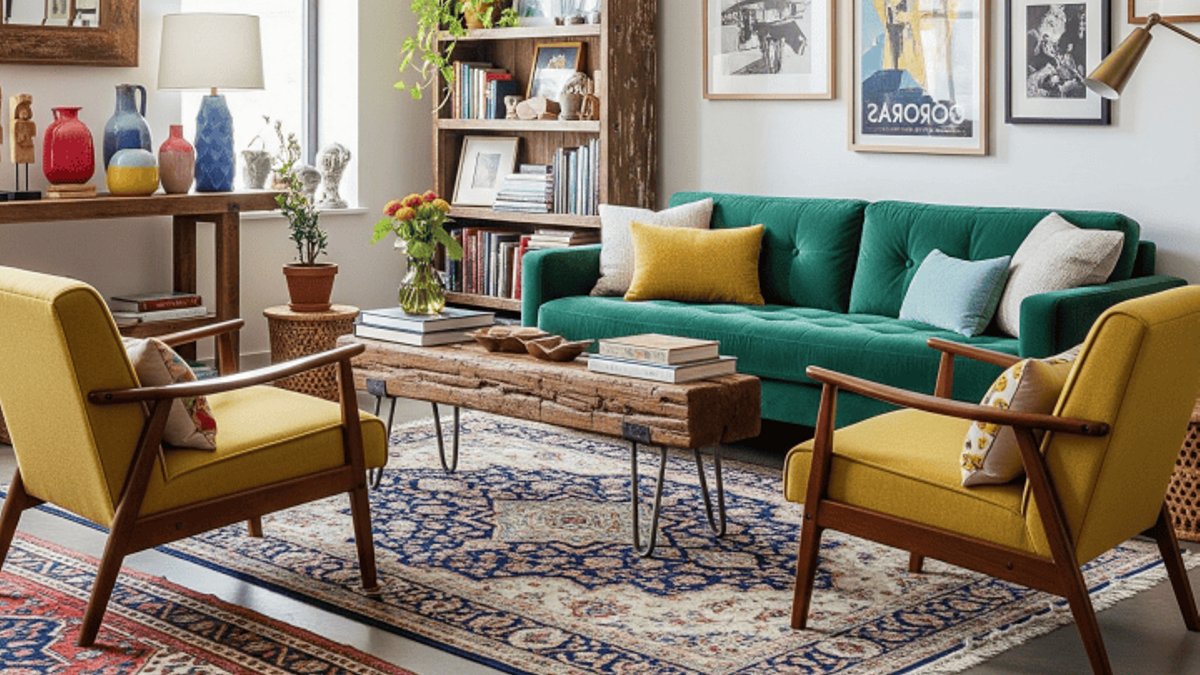
As we move into 2026, home design trends are shifting in ways that reflect how people actually want to live. The focus is no longer on bold aesthetics or following whatever was popular a decade ago. Instead, homeowners are prioritizing spaces that work for their specific needs while also considering environmental impact and long-term usability. The result is a design setting that feels more thoughtful and, in many ways, more personal.
Styles Falling Out of Favor
Some of the most dominant looks from the past ten years are fading quickly. Stark, cool color schemes that were once praised for their modern edge now read as sterile and impersonal to many buyers and renovators. The ultra-minimalist approach, with its empty walls and sparse furnishings, is being replaced by spaces that feel layered and actually livable. Industrial style, characterized by raw concrete, exposed piping, and harsh angles, has drawn criticism for feeling cold and overly commercial. These departures signal a broader move away from design that prioritizes appearance over comfort.
Related: Smart Gadgets Offer Cottage Security
What’s Taking Their Place
Sustainability has moved from a niche selling point to an outright expectation. Reclaimed materials, energy-efficient systems, and low-impact finishes are reshaping how homes are built and renovated. Smart home integration is becoming standard rather than optional, with connected lighting, security, and energy systems making residences more responsive to daily routines. The return of closed floor plans reflects a practical desire for privacy and acoustic separation, particularly in households juggling remote work, schooling, and other activities under one roof.
Emerging Directions
Looking further ahead, a few new movements are taking shape. AI-powered design tools are helping both homeowners and professionals visualize projects, plan layouts, and manage renovations more efficiently than before. Organic minimalism offers a softer, warmer take on the stripped-down aesthetic, blending clean lines with natural textures and earthy color palettes. Design for wellness is becoming a defining feature in new projects, with circadian lighting, air-purifying materials, and floor plans that prioritize mental clarity and physical comfort becoming more common.
These shifts suggest that buyers are increasingly interested in how a space makes them feel over how it photographs. The emphasis on wellness-oriented design, in particular, points to growing awareness around how environments affect mood and productivity. While it remains to be seen how quickly these features become standard in mainstream construction, the direction seems clear.
Related: Luxury Living in Forest Grove Neighborhoods
The Move Toward Personal Expression
After years of uniform trends like minimalist grey palettes and identical open layouts, interior design is swinging back toward individuality. Homeowners are adopting spaces that reflect their own tastes, stories, and daily habits. This means mixing vintage finds with contemporary pieces, showcasing personal art collections, and choosing colors and materials that carry emotional weight. The shift represents a departure from design driven purely by trends toward spaces that feel authentic to the people living in them.
Design is becoming less about what looks current and more about what feels right for a particular household. This return to self-expression brings warmth, depth, and meaning into the home, creating environments that are stylish without feeling generic. It’s a move toward interiors that tell a story through thoughtful, curated choices rather than following a prescribed formula.


