
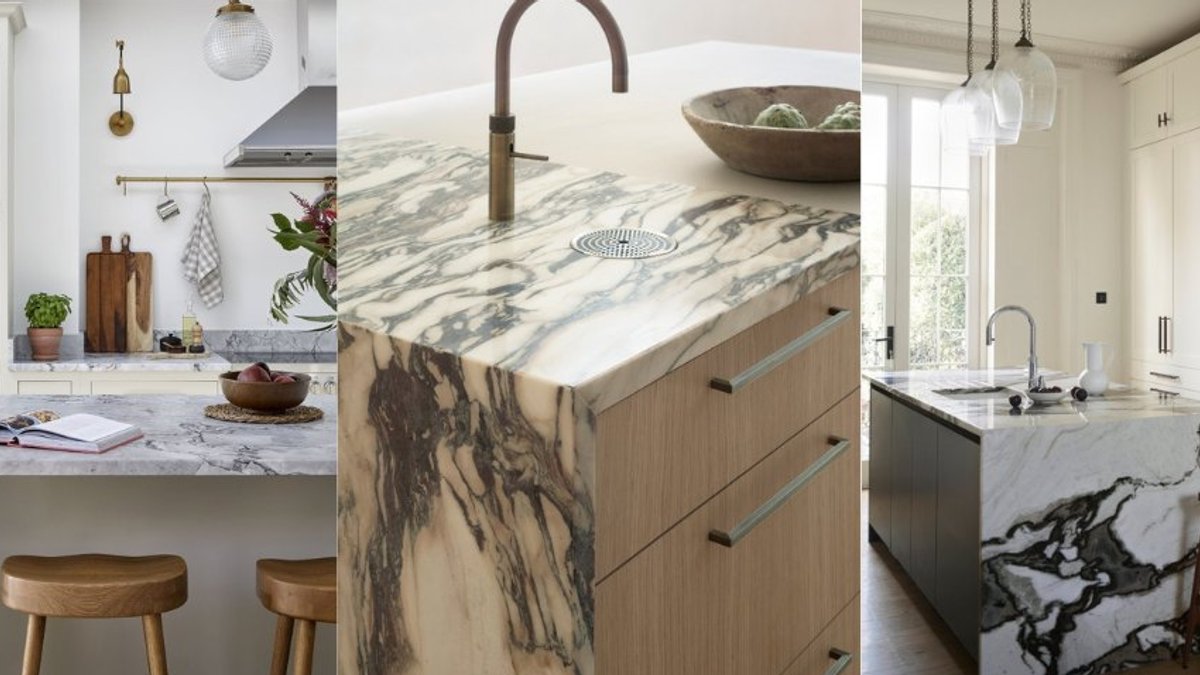
A waterfall kitchen island can be the contemporary touch your new kitchen design needs, especially if you’re planning a renovation and an island is a must-have. This design has become a staple in modern interiors due to its sophisticated allure and sleek aesthetics.
A waterfall kitchen island is created by continuing the worktop material over the edge of the cabinetry and vertically down the side of the island to the floor on one or both sides, according to Graham Robinson, head of design at Halcyon Wigmore Street. This design element creates a strong, architectural detail that frames the island and makes a dramatic statement.
Allison Lynch, director of the Roundhouse Cambridge showroom, notes that they use stone downstands for a feature effect on the island or even at the end of a cabinetry run, which doesn’t end at a wall. This worktop style is not just for aesthetics; it can also be a practical choice for busy, high-traffic kitchens.
A waterfall edge can be a practical choice because the side of the island is finished in a durable worktop material rather than a painted or veneered panel, making it more resistant to everyday wear, says Graham. With a bespoke approach or expert help, the design opportunities are limitless, allowing you to customize your unit from its dimensions and materials to clever, practical features.
Downstands can be various thicknesses suited to the design and layout, and they also create a dedicated seating area on an island as well as an opportunity to introduce a different material for the island, according to Allison. This flexibility in design can help create a unique and functional kitchen space.
When considering a waterfall island, it’s essential to think beyond aesthetics, advises Tom Howley, creative design director at the eponymous kitchen company. The island should have enough surrounding space to maintain good circulation, and the material you choose needs to be durable enough for everyday family life.
Related: Best blue hostas and ideal pairings
The choice of material is incredibly important, as it covers a large surface and needs to work from the front, top, and sides of the island, balancing with the cabinetry, flooring, and other finishes in the wider room, says Graham. Tom agrees, adding that the waterfall edge should complement the rest of the cabinetry and worktops, creating a seamless, balanced look rather than making it feel like a standalone feature.
Stone tends to be the most popular choice because of its color and veining, notes Allison. Solid timber also works well, as you can use finger joints, a detail that can enhance the downstand. Corian/resins are also worth considering because they provide a seamless look, giving the illusion of a shape and a solid piece of stone.
A beautifully designed waterfall island can add a sense of luxury to your kitchen design, serving as a striking focal point within a kitchen, creating a strong architectural statement while reinforcing a sense of craftsmanship and material continuity.
Lastly, be mindful of costs, as waterfall islands require more material and craftsmanship, so it’s essential to weigh the visual impact against your budget, adds Tom. With careful planning and consideration, a waterfall kitchen island can be a stunning and functional addition to your kitchen.
When planning your kitchen, incorporating elements like natural designs and considering the overall aesthetic can help create a cohesive look.


