
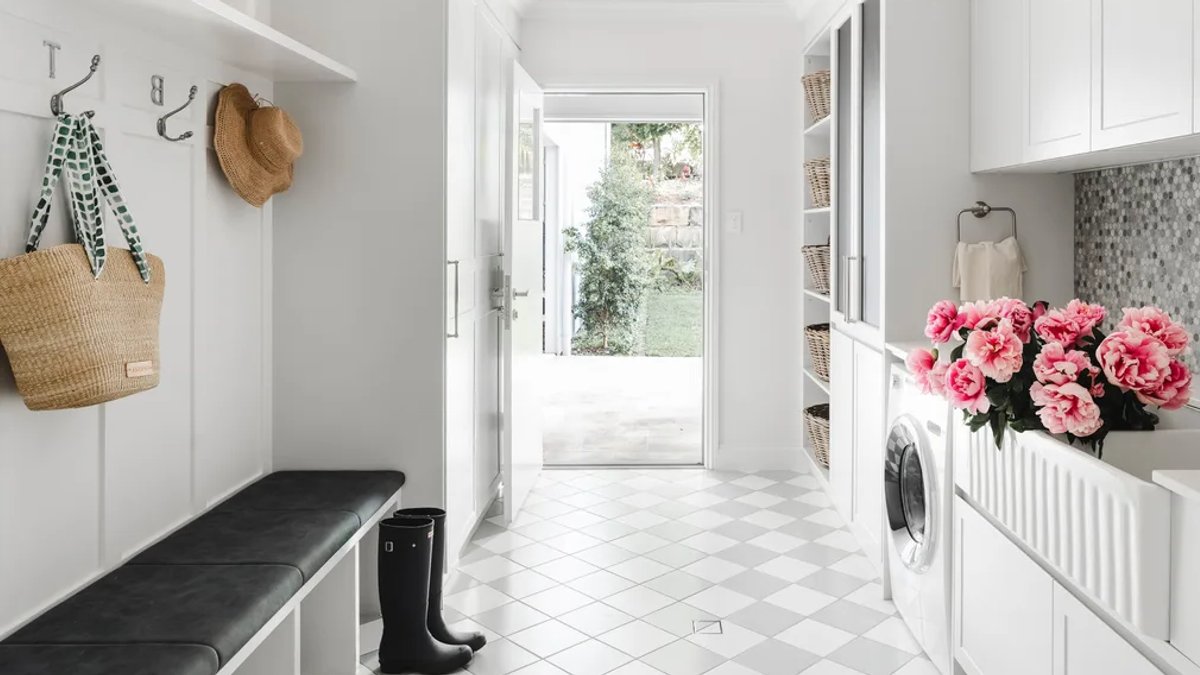
Laundry rooms often receive little attention during the planning stages of a home, even though they tend to be among the most frequently used areas. Homeowners who want a space that works well for everyday chores should begin by installing the three core pieces of equipment: a washing machine, a heat-pump dryer, and a sturdy hanging rail positioned above the sink for quick air-drying of delicate items. Prioritizing these basics ensures the room serves its primary function efficiently, even in limited spaces.
Both storage capacity and bench surface area are important for a functional laundry. A thoughtfully arranged room can flexibly serve a small household that needs only a compact cupboard, or it can accommodate a larger family that prefers a spacious layout with ample room for sorting baskets, cleaning supplies, and folded garments. Great laundry design goes beyond the basics, adapting to the unique habits and needs of each household.
Tailoring Your Laundry Layout
Determining the primary role of the laundry helps shape every design decision. Some families turn the area into a mudroom where shoes, coats, and sports gear are dropped off, while others use it as a dedicated pet-care station for washing blankets and grooming tools. Providing direct outdoor access simplifies the movement of wet items and reduces the need to carry them through the interior of the house. This consideration is especially important for households with pets or those who frequently air-dry garments.
The flow of clothing in and out of the space is a central consideration. Interior designer Jade Pennell points out that locating a laundry chute close to a bathroom makes it easy to drop soiled items from upper floors, and that positioning the machines near a bathroom streamlines the transition from washing to drying without unnecessary steps. This layout ensures a seamless journey for garments, enhancing the room’s functionality.
Related Post: Design Board Showcases Classic Luxe Dining Trends
Designing for Efficiency
When planning the layout, the natural workflow—sorting, washing, drying, and folding—should dictate where each element sits. Separate hampers for colors and fabrics keep the sorting stage organized, while a two-bowl sink offers a place to pre-treat stains and rinse delicate pieces before they enter the machine. Built-in drying racks mounted on the wall free up floor space and allow items to air-dry while other loads are processed. Ample benchtop space is essential for folding laundry, and integrated ironing boards keep the area tidy.
Tall cupboards, shallow drawers, and deep drawers each serve distinct storage purposes. A tall cupboard, at least 1800 mm high and 600 mm wide, can hold a broom, freestanding ironing board, and stick vacuum cleaner. Shallow drawers, 150 mm in height, are ideal for storing lint rollers and pegs. Deep drawers, up to 450 mm in height, are perfect for storing bottles of laundry detergent and cleaning supplies. These storage solutions ensure everything has its place, making the room more organized and efficient.
Benchtops should reach a depth of at least 650 mm to accommodate larger folding tasks, and hanging rails installed beneath shelving make it simple to suspend shirts, skirts, and other garments for air drying without sacrificing countertop space. A hanging rail mounted under high open shelving or 350-mm deep upper cabinets is particularly effective for this purpose. This design maximizes space while maintaining functionality.
Ergonomic considerations improve comfort during long laundry sessions. Raising appliances to a height of 1,200 mm reduces the need to bend, which lessens strain on the back and knees. Homeowner Danika Downting raised her washing machine and dryer about 600 mm off the floor, appreciating the practical and ergonomic benefits. This design detail not only eases daily use but also frees up space for storage or pull-out shelves underneath, enhancing the room’s utility.
Related Post: Parisian Bath Design Merges Classic and Modern
Selecting surface materials such as porcelain, ceramic, or engineered stone ensures that the worktop can tolerate frequent exposure to water, steam, and cleaning chemicals without deteriorating. Danika opted for durable, timeless surfaces in her Gold Coast laundry. If using natural stone, choosing a durable option ensures the space remains functional and stress-free.
Effective ventilation prevents moisture buildup that can lead to mould growth. Incorporating natural light through operable windows, adding discreet dehumidifiers, and ensuring that air can circulate freely keep the environment dry and healthy. Throwing open a door to a sunny spot outside or integrating extraction fans and heated towel rails further enhances ventilation, making the space more pleasant to use.
Lighting plays both functional and aesthetic roles. A combination of ambient illumination for overall brightness and task lighting focused on work zones such as the sink and folding area creates a well-lit environment that reduces eye strain. Interior designer Kate Walker stresses that layered lighting not only improves safety but also adds visual interest, turning a utilitarian room into a pleasant space.


