
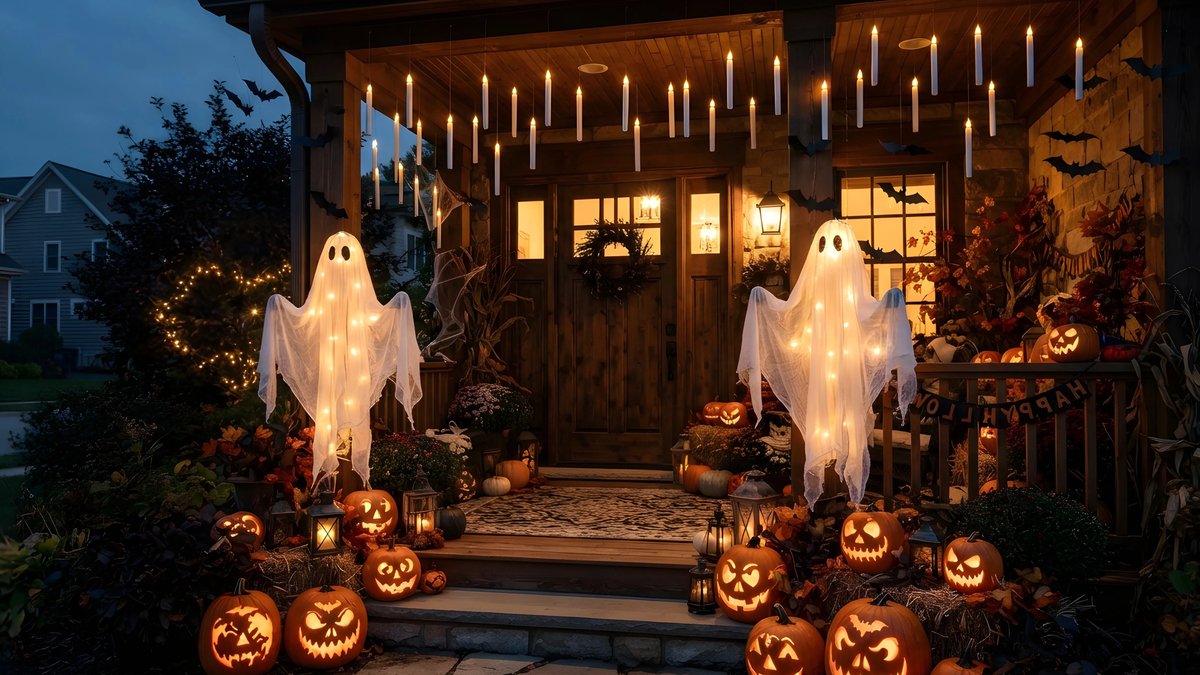
Front porches are experiencing a resurgence in new home construction, driven by a shift toward walkable neighborhoods and smaller home sizes that push homeowners to maximize outdoor living areas. According to the National Association of Home Builders (NAHB), porches rank as the most popular outdoor feature on new homes, offering a versatile space that extends indoor living without increasing square footage. This trend aligns with a growing focus on community connection and practical outdoor design.
Halloween’s Front Porch Revolution
Halloween decorating is evolving from simple doorway wreaths to elaborate front porch displays, fueled by a projected $13.5 billion in consumer spending by 2026, according to the National Retail Federation. Over a third of consumers name Halloween their favorite holiday, driving demand for immersive, photogenic setups. The front porch’s sheltered space, electrical outlets, and room for grouped pumpkins create an ideal stage for seasonal creativity.
Traditional orange-and-black schemes are giving way to harvest-inspired palettes featuring sage, marigolds, creams, plums, and deeper greens. Textile layering mirrors indoor design trends, with themed doormats, patterned pillows, and seasonal throws complementing existing porch furniture.
Witchcore and Haunted Garden Aesthetics
Witchcore, an aesthetic rooted in witchcraft and nature, is influencing Halloween decor with twisted branches, wildflowers, vintage books, and apothecary bottles. Broomsticks, black cats, and cauldrons add playful touches, while weathered lanterns and dried flowers enhance the natural, slightly spooky atmosphere.
Adding to this, moody “haunted garden” designs draw from Gothic and Victorian influences. Oversized planters with dark foliage, brass urns, and creeping vines frame the entrance, while clustered pumpkins and strategically placed cobwebs evoke a romantic, eerie charm.
Technology and Experiential Design
Homeowners are adopting technology to enhance the Halloween experience, using fog machines, flickering lights, and motion-activated skeletons to create dynamic effects. Animatronics that spring to life or play creepy soundtracks when approached add a theatrical flair. Electrical outlets make powering these features straightforward, while architectural elements like columns provide canvases for draped cobwebs or tattered fabrics.


